
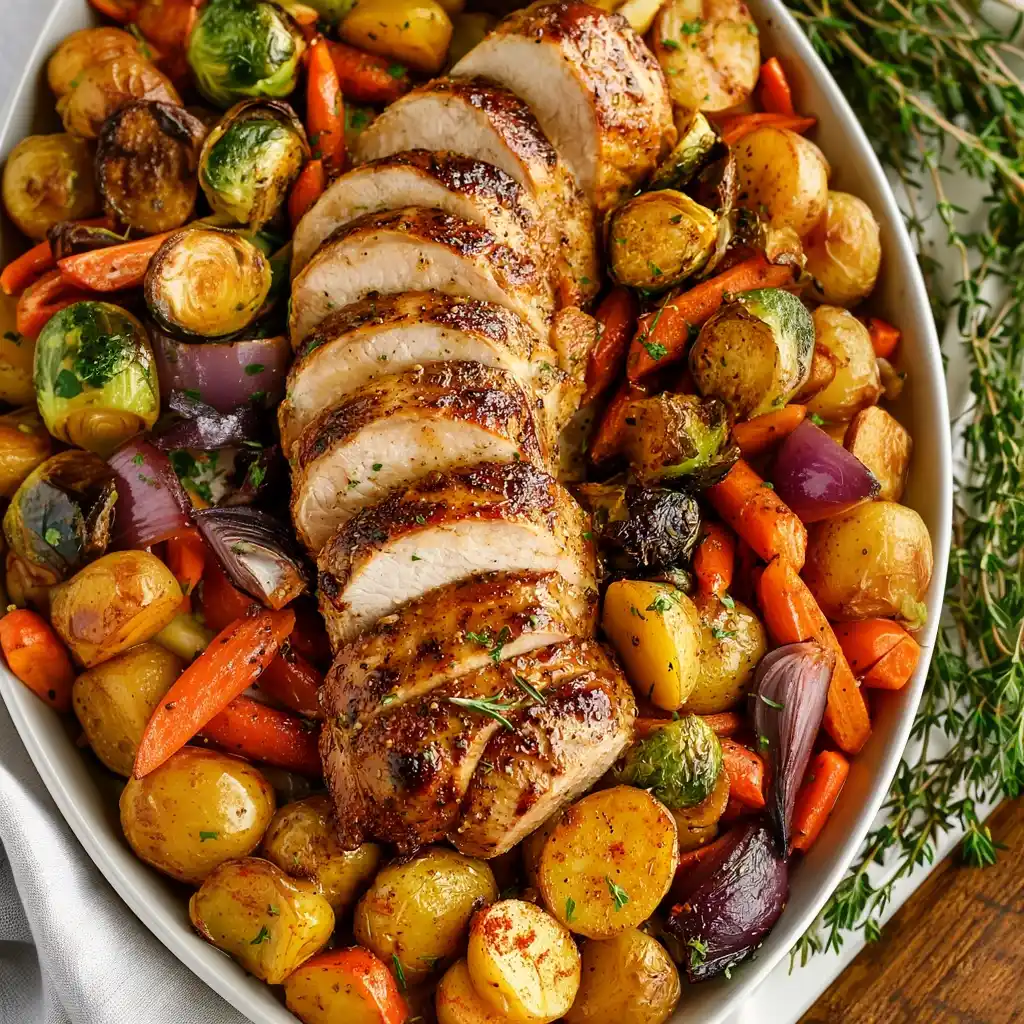
This Baked Apple Cider Pork Tenderloin with Roasted Vegetables is packed with seasonal flavors, and comes together on a single baking sheet, making cleanup almost as enjoyable as dinner itself.
The apple cider creates a lightly sweet glaze that complements savory herbs like rosemary and thyme, while the vegetables roast until perfectly caramelized.
Whether you’re cooking dinner for your family or entertaining guests, this recipe delivers restaurant-quality results with very little effort.
Why You’ll Love This Recipe
This recipe has everything you could want in a homemade dinner. It’s easy to prepare, uses everyday ingredients, and only requires one pan.
The pork stays moist and juicy thanks to the apple cider marinade, while the vegetables absorb all the flavorful juices as they roast. Every bite offers the perfect balance of sweet, savory, and herbaceous flavors.
You’ll also appreciate how versatile this recipe is. It works equally well for a cozy autumn dinner, Sunday family meal, or even as an alternative to traditional holiday roasts.
Ingredients
For the Pork Tenderloin
- 1 pork tenderloin (about 1½ pounds)
- 1 cup apple cider
- 2 tablespoons Dijon mustard
- 2 tablespoons olive oil
- 3 garlic cloves, minced
- 1 tablespoon fresh rosemary, chopped
- 1 teaspoon fresh thyme
- 1 teaspoon salt
- ½ teaspoon black pepper
For the Roasted Vegetables
- 1 pound baby potatoes, halved
- 3 large carrots, sliced
- 12 ounces Brussels sprouts, halved
- 1 large red onion, cut into wedges
- 2 tablespoons olive oil
- 1 teaspoon garlic powder
- 1 teaspoon paprika
- Salt and pepper to taste
Optional garnish:
- Fresh parsley
- Extra rosemary
- Sliced apples
Step-by-Step Instructions
1. Prepare the Oven
Preheat your oven to 400°F (200°C). Line a large baking sheet or roasting pan with parchment paper for easy cleanup.
2. Make the Marinade
In a bowl, whisk together the apple cider, Dijon mustard, olive oil, garlic, rosemary, thyme, salt, and black pepper until well combined.
Reserve about one-third of the mixture for brushing during cooking.
3. Marinate the Pork
Pat the pork tenderloin dry with paper towels and coat it with the marinade. Allow it to marinate for at least 20 minutes. If you have extra time, marinating for 2–4 hours will produce even more flavor.
4. Prepare the Vegetables
Place the potatoes, carrots, Brussels sprouts, and red onion on the prepared baking sheet.
Drizzle with olive oil and season with garlic powder, paprika, salt, and pepper. Toss everything until evenly coated.
5. Roast the Vegetables
Roast the vegetables alone for about 15 minutes. Since potatoes and carrots take longer to cook than pork, giving them a head start ensures everything finishes at the same time.
6. Add the Pork
Push the vegetables toward the edges of the baking sheet and place the pork tenderloin in the center.
Brush the reserved marinade over the pork.
Continue roasting for another 20–25 minutes, or until the thickest part of the pork reaches an internal temperature of 145°F (63°C).
7. Rest Before Serving
Remove the pan from the oven and let the pork rest for 5–10 minutes before slicing.
This allows the juices to redistribute throughout the meat, ensuring every slice stays moist and tender.
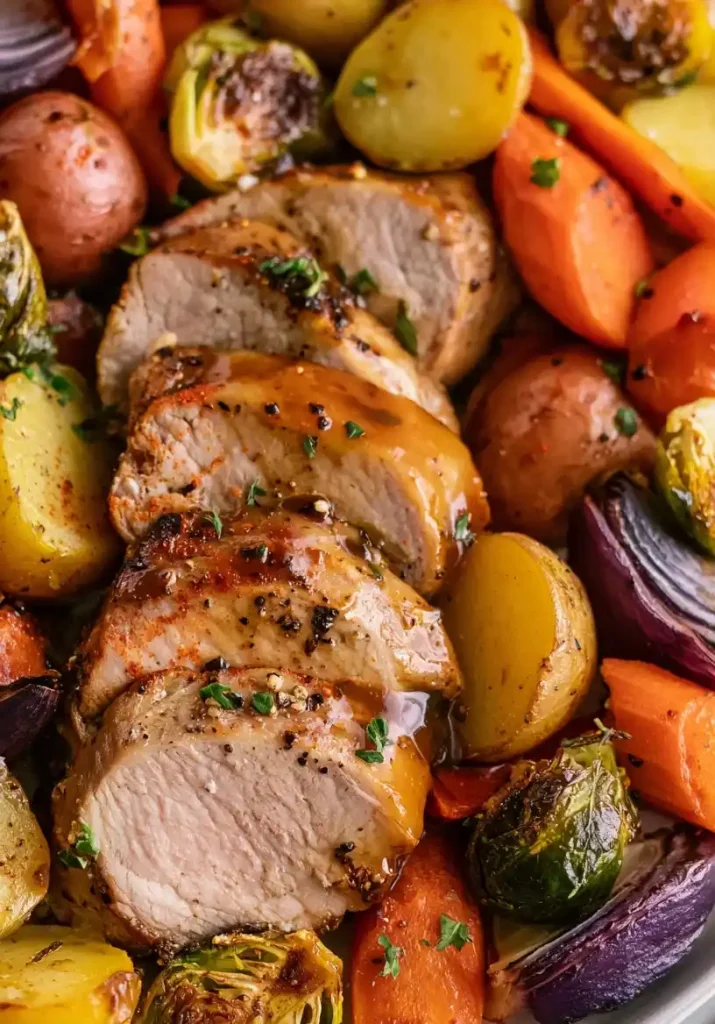
Serve the sliced pork alongside the roasted vegetables, spooning any pan juices over everything for extra flavor.
Tips for Perfect Pork Tenderloin
Pork tenderloin cooks quickly, so using a meat thermometer is the easiest way to prevent overcooking.
Avoid cutting into the pork immediately after baking. Resting the meat keeps it juicy and flavorful.
Cut your vegetables into similar-sized pieces so they roast evenly.
Don’t overcrowd the baking sheet. If the vegetables are packed too closely together, they’ll steam instead of caramelize.
For even more flavor, sear the pork in a hot skillet for two minutes per side before placing it in the oven.
Delicious Variations
One of the best things about this recipe is how easy it is to customize.
Replace Brussels sprouts with green beans, broccoli, or butternut squash.
Add sliced Honeycrisp or Gala apples during the final 15 minutes of roasting for an extra layer of sweetness.
If you enjoy a richer glaze, simmer one cup of apple cider in a saucepan until reduced by half, then whisk in a teaspoon of Dijon mustard and a tablespoon of maple syrup before drizzling it over the finished dish.
Fresh sage also pairs beautifully with rosemary and thyme if you’re looking for deeper autumn flavors.
What to Serve with Apple Cider Pork Tenderloin
Although this is already a complete meal, several side dishes pair wonderfully with it.
A basket of warm dinner rolls is perfect for soaking up the flavorful pan juices.
Wild rice or buttered egg noodles make excellent hearty additions.
For a lighter meal, serve the pork with a crisp green salad dressed in a simple apple vinaigrette.
If you’re preparing this for a holiday dinner, homemade cranberry sauce provides a bright, tangy contrast to the sweetness of the apple cider.
Storage and Reheating
Store leftover pork and vegetables in an airtight container in the refrigerator for up to four days.
To reheat, place everything in a 325°F oven for about 10–15 minutes until warmed through. You can also microwave individual portions, although the vegetables will stay crispier when reheated in the oven.
The cooked pork freezes well for up to three months. Thaw overnight in the refrigerator before reheating.
Recipe FAQ’s
Can I use pork loin instead?
Yes, but pork loin is much larger than pork tenderloin and requires a longer cooking time. Always rely on the internal temperature rather than the cooking time.
Can I substitute apple juice?
You can. However, fresh apple cider provides a richer, deeper flavor that works especially well with herbs and roasted vegetables.
Can I prepare this recipe ahead of time?
Absolutely. Marinate the pork overnight and chop the vegetables a day in advance. When you’re ready to cook, simply assemble everything on the baking sheet and roast.
Baked Apple Cider Pork Tenderloin with Roasted Vegetables
Ingredients
For the Pork Tenderloin
- 1 pork tenderloin about 1½ pounds
- 1 cup apple cider
- 2 tablespoons Dijon mustard
- 2 tablespoons olive oil
- 3 garlic cloves minced
- 1 tablespoon fresh rosemary chopped
- 1 teaspoon fresh thyme
- 1 teaspoon salt
- ½ teaspoon black pepper
For the Roasted Vegetables
- 1 pound baby potatoes halved
- 3 large carrots sliced
- 12 ounces Brussels sprouts halved
- 1 large red onion cut into wedges
- 2 tablespoons olive oil
- 1 teaspoon garlic powder
- 1 teaspoon paprika
- Salt and pepper to taste
Optional garnish:
- Fresh parsley
- Extra rosemary
- Sliced apples
Instructions
Prepare the Oven
- Preheat your oven to 400°F (200°C). Line a large baking sheet or roasting pan with parchment paper for easy cleanup.
Make the Marinade
- In a bowl, whisk together the apple cider, Dijon mustard, olive oil, garlic, rosemary, thyme, salt, and black pepper until well combined.
- Reserve about one-third of the mixture for brushing during cooking.
Marinate the Pork
- Pat the pork tenderloin dry with paper towels and coat it with the marinade. Allow it to marinate for at least 20 minutes. If you have extra time, marinating for 2–4 hours will produce even more flavor.
Prepare the Vegetables
- Place the potatoes, carrots, Brussels sprouts, and red onion on the prepared baking sheet.
- Drizzle with olive oil and season with garlic powder, paprika, salt, and pepper. Toss everything until evenly coated.
Roast the Vegetables
- Roast the vegetables alone for about 15 minutes. Since potatoes and carrots take longer to cook than pork, giving them a head start ensures everything finishes at the same time.
Add the Pork
- Push the vegetables toward the edges of the baking sheet and place the pork tenderloin in the center.
- Brush the reserved marinade over the pork.
- Continue roasting for another 20–25 minutes, or until the thickest part of the pork reaches an internal temperature of 145°F (63°C).
Rest Before Serving
- Remove the pan from the oven and let the pork rest for 5–10 minutes before slicing.
- This allows the juices to redistribute throughout the meat, ensuring every slice stays moist and tender.
- Serve the sliced pork alongside the roasted vegetables, spooning any pan juices over everything for extra flavor.