

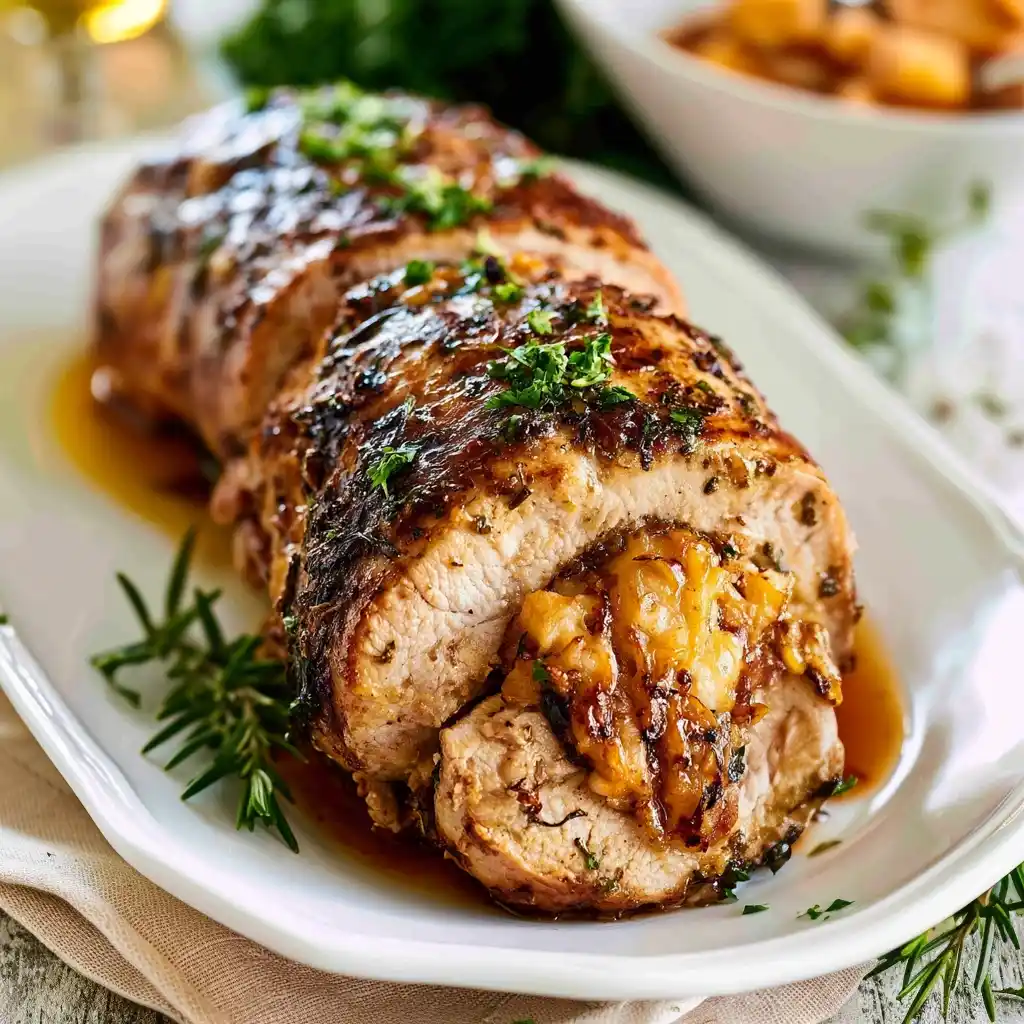
Apple cheddar stuffed pork tenderloin is the kind of dinner that looks impressive on the table but is surprisingly straightforward to make. Tender pork is filled with crisp, lightly sweet apples, sharp cheddar cheese, and savory herbs, then seared and roasted until beautifully browned on the outside and juicy in the center.
Whether you’re planning a cozy weekend dinner, a holiday meal, or simply want to make pork tenderloin a little more exciting, this stuffed pork recipe is worth adding to your rotation.
Why You’ll Love This Apple Cheddar Stuffed Pork Tenderloin
There are plenty of reasons to make this recipe, but the biggest one is the combination of flavor and simplicity.
- The pork is tender and flavorful when cooked properly.
- Apples provide a naturally sweet contrast to the savory pork.
- Sharp cheddar adds richness and a creamy, tangy finish.
- Searing creates a deeply browned exterior before roasting.
- The presentation makes an ordinary dinner feel special.
- Much of the preparation can be done ahead of time.
- The recipe pairs well with everything from mashed potatoes to roasted vegetables.
It is also an adaptable recipe. You can change the apple variety, experiment with different cheeses, or add ingredients such as toasted pecans, dried cranberries, bacon, or caramelized onions.
Ingredients You’ll Need
For the pork tenderloin:
- 1 large pork tenderloin, about 1 to 1 1/4 pounds
- 1 medium firm apple, such as Honeycrisp, Granny Smith, or Pink Lady
- 1 cup shredded sharp cheddar cheese
- 1 tablespoon Dijon mustard
- 1 teaspoon fresh thyme leaves
- 1/2 teaspoon garlic powder
- 1/2 teaspoon kosher salt, plus more to taste
- 1/4 teaspoon freshly ground black pepper
- 1 tablespoon olive oil
- 1 tablespoon butter
Optional additions include 1/4 cup chopped pecans, 2 tablespoons dried cranberries, or 2 tablespoons finely chopped fresh sage.
How to Prepare the Pork Tenderloin for Stuffing
Before stuffing the pork, remove the silver skin. This is the tough, silvery membrane that runs along portions of the tenderloin. Slide a sharp knife underneath it and carefully trim it away without removing too much meat.
Next, butterfly the pork tenderloin.
Place the tenderloin on a cutting board and hold your knife parallel to the board. Starting along one long side, make a lengthwise cut through the center of the tenderloin, stopping before you cut all the way through.
Open the pork like a book.
If necessary, make another shallow cut on either side so the tenderloin opens into a relatively even rectangle. Cover it with plastic wrap and gently pound the thicker sections with a meat mallet until the meat has an even thickness.
Don’t pound aggressively. The goal is simply to create a flat surface that can be rolled around the filling.
Season the inside of the pork with salt, pepper, and garlic powder.
Make the Apple Cheddar Filling
Peel the apple if desired, remove the core, and cut the apple into small pieces. Small dice work particularly well because they distribute evenly throughout the pork.
In a bowl, combine the diced apple, cheddar cheese, thyme, and Dijon mustard.
The Dijon is optional, but it adds a subtle sharpness that helps connect the sweet apple and savory pork. If you’re adding pecans, cranberries, sage, or another ingredient, stir it into the filling now.
Keep the pieces relatively small. Large chunks can make the tenderloin difficult to roll and may cause the filling to spill out during cooking.
How to Stuff and Roll Pork Tenderloin
Spread the apple-cheddar mixture over the flattened pork, leaving a small border around the edges.
Don’t pile the filling too high. It can be tempting to add as much as possible, but overstuffing makes the tenderloin difficult to roll and secure.
Starting with one long edge, carefully roll the pork into a tight cylinder.
Use kitchen twine to secure the tenderloin at regular intervals. Tie the ends as well as the center so the filling stays inside during cooking.
If some cheese or apple pieces poke out, simply tuck them back in where possible.
Season the outside of the pork with the remaining salt and pepper.
At this point, the stuffed tenderloin is ready to cook.
Sear the Stuffed Pork Tenderloin
Searing the pork before roasting is an important step. It creates a browned exterior and adds another layer of savory flavor.
Heat the olive oil in a large oven-safe skillet over medium-high heat. Add the butter and let it melt.
Carefully place the stuffed pork tenderloin in the skillet.
Sear it on all sides, turning with tongs as needed, until the exterior is deeply golden brown. This usually takes several minutes.
Don’t worry about cooking the pork through at this stage. The oven will finish the job.
If your skillet isn’t large enough to comfortably accommodate the tenderloin, you can sear it in batches or use a separate roasting pan after browning.
Roast the Pork Tenderloin
Once the pork is browned, transfer the skillet to a preheated 375°F oven.
Roast until the center reaches a safe internal temperature according to current food-safety guidance. Because pork tenderloins vary in size and thickness, an instant-read meat thermometer is much more reliable than cooking time alone.
For the most accurate reading, insert the thermometer into the thickest portion of the pork rather than directly into the apple-cheddar filling.
If the exterior is browning too quickly, loosely tent the pork with foil while it finishes cooking.
How to Know When Pork Tenderloin Is Done
A meat thermometer is the best tool for determining doneness.
Insert it into the thickest part of the pork, avoiding the center of the filling if possible. Pork should reach a safe internal temperature before serving.
Remember that the temperature can continue to rise slightly while the meat rests.
Cooking time will vary depending on the size of the tenderloin, how evenly it was rolled, and your oven. Rather than relying on a precise number of minutes, use the thermometer as your guide.
This simple step can make the difference between juicy pork and overcooked pork.
Let the Pork Rest Before Slicing
When the pork reaches the appropriate temperature, remove it from the oven and transfer it to a cutting board.
Let it rest for several minutes before slicing.
Resting gives the juices time to redistribute throughout the meat. It also makes the tenderloin easier to slice without the filling immediately spilling onto the cutting board.
Remove the kitchen twine before serving.
Then slice the pork crosswise into thick medallions.
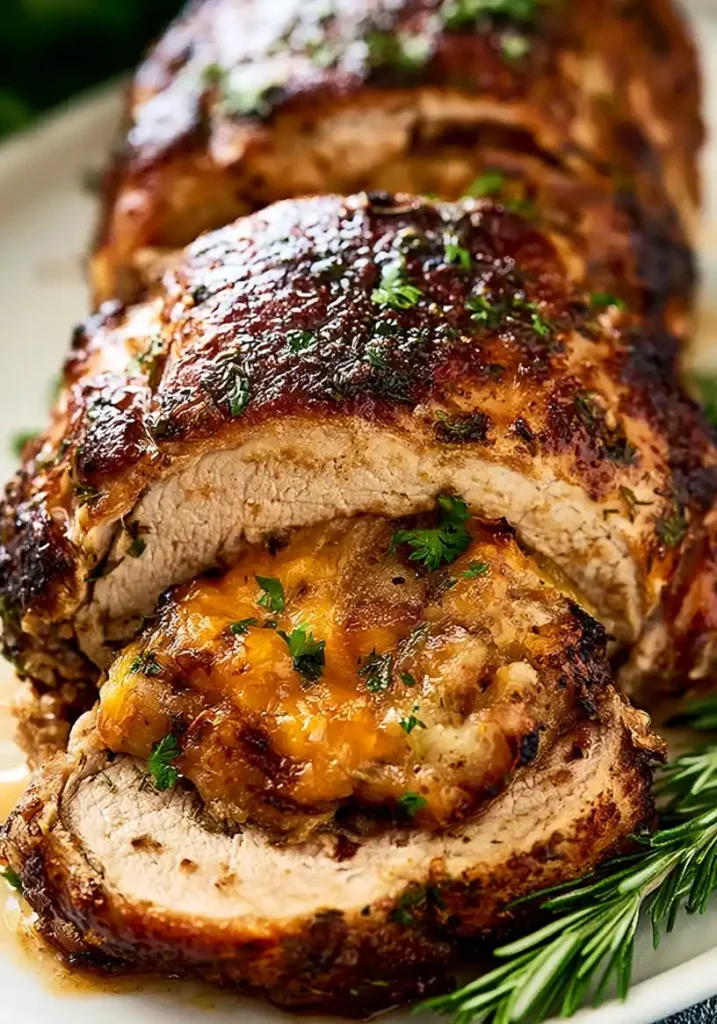
The apple and cheddar filling should create a beautiful spiral through the center of each slice.
What to Serve With Apple Cheddar Stuffed Pork
Because the pork combines sweet apples with rich cheddar, it pairs especially well with simple savory side dishes.
- Mashed Potatoes
- Roasted Brussels Sprouts
- Roasted Root Vegetables
- Green Beans
- Wild Rice or Grain Pilaf
- Simple Green Salad
Easy Variations
One of the best things about stuffed pork tenderloin is how easily you can customize it.
Apple, Cheddar, and Bacon
Add cooked, crumbled bacon to the apple-cheddar filling for a smoky and savory variation.
Apple, Cranberry, and Sage
For a holiday-inspired version, combine the apples and cheddar with dried cranberries and fresh sage.
Apple, Pecan, and Cheddar
Add finely chopped toasted pecans for crunch. Toasting the nuts first intensifies their flavor.
Pear and Gruyère
For a more elegant variation, replace the apple with firm pear and use Gruyère instead of cheddar.
Caramelized Onion and Apple
Slowly caramelized onions add sweetness and depth while complementing the sharpness of the cheddar.
Common Mistakes to Avoid
Overstuffing the Pork
More filling isn’t necessarily better. Too much stuffing makes rolling difficult and increases the chance that the filling will escape during cooking.
Skipping the Sear
Roasting alone will cook the pork, but searing gives you a much more flavorful exterior.
Guessing the Cooking Time
Pork tenderloin is relatively lean, so overcooking can quickly make it dry. Use a thermometer instead of relying solely on the clock.
Slicing Immediately
Cutting into the pork the second it comes out of the oven can release juices onto the cutting board. Give it a few minutes to rest first.
Recipe FAQs
Can I use pork loin instead of pork tenderloin?
You can, but pork loin is a larger and different cut of meat. It requires different preparation and cooking times. Pork tenderloin is smaller, leaner, and particularly convenient for butterflying and stuffing.
Should I peel the apples?
Peeling is optional. Removing the peel creates a softer, more uniform filling, while leaving it on adds texture and color.
Can I freeze stuffed pork tenderloin?
You can freeze cooked leftovers, although the texture of the apples and cheese may change slightly after freezing and reheating. For the best quality, enjoy the dish fresh or refrigerated within a few days.
Apple Cheddar Stuffed Pork Tenderloin
Ingredients
- 1 large pork tenderloin about 1 to 1 1/4 pounds
- 1 medium firm apple such as Honeycrisp or Granny Smith
- 1 cup sharp cheddar cheese shredded
- 1 tablespoon Dijon mustard
- 1 teaspoon fresh thyme leaves
- ½ teaspoon garlic powder
- ½ teaspoon kosher salt
- ¼ teaspoon black pepper
- 1 tablespoon olive oil
- 1 tablespoon butter
- Optional additions:
- ¼ cup pecans finely chopped
- 2 tablespoons dried cranberries
- 2 tablespoons fresh sage finely chopped
Instructions
- Preheat the oven: Preheat your oven to 375°F (190°C).
- Prepare the pork: Remove any silver skin from the pork tenderloin. Place the tenderloin on a cutting board and butterfly it by making a lengthwise cut through the center, being careful not to cut all the way through.
- Flatten the pork: Open the tenderloin like a book. Cover it with plastic wrap and gently pound the thicker sections until the pork is relatively even in thickness.
- Season the pork: Season the inside with the kosher salt, black pepper, and garlic powder.
- Prepare the apple: Core the apple and cut it into small pieces. Peeling is optional.
- Make the filling: Combine the diced apple, shredded cheddar, Dijon mustard, and fresh thyme in a bowl. Stir in the optional pecans, cranberries, or sage if using.
- Fill the pork: Spread the apple and cheddar mixture evenly over the flattened tenderloin, leaving a small border around the edges.
- Roll the tenderloin: Starting from one long side, carefully roll the pork into a tight cylinder, keeping as much of the filling inside as possible.
- Secure the pork: Tie the rolled tenderloin securely with kitchen twine at several intervals so it holds its shape during cooking.
- Sear the pork: Heat the olive oil and butter in a large oven-safe skillet over medium-high heat. Place the stuffed tenderloin in the skillet and sear it on all sides until deeply golden brown.
- Roast: Transfer the skillet to the preheated oven. Roast for approximately 20–25 minutes, but begin checking the internal temperature early because cooking time will vary according to the size and thickness of the tenderloin.
- Check the temperature: Insert an instant-read thermometer into the thickest part of the pork. Remove it from the oven when it reaches at least 145°F (63°C).
- Rest: Transfer the pork to a cutting board and allow it to rest for at least 3 minutes. A slightly longer rest can make slicing easier.
- Slice and serve: Remove the kitchen twine and slice the tenderloin into thick medallions. Arrange the slices on a serving platter and spoon any pan juices over the top.
